
Digestive Health
Cows & Buffaloes
Diarrhoea in Adult Cattle — Reading the Loose Dung Story
Updated 26 Aug 2026 • By Falah Nutrition Desk, Animal Nutrition Advisor
Loose dung in an adult animal has many authors: a feed slip, lush season grass, worms, or true illness. Most feeding-related cases mend in days once the cause is fixed — the craft is telling the harmless from the warning signs while supporting the animal through it.
Common Signs
- Dung loose to watery, splashing rather than settling into a pat
- Dirty tail and hindquarters, sometimes scalded skin under the tail
- Appetite normal-to-reduced depending on cause and severity
- Gradual weight loss and dropping yield if it persists
- Warning versions: blood or black colour, foul smell with fever, or a very dull animal
Possible Causes
- Sudden diet shifts — the classic spring flush of lush green after a dry winter
- Concentrate overload or a raid on the feed store
- Spoiled feed: mouldy fodder, sour leftovers
- Heavy worm burden, especially in younger and neglected animals
- Infections and other illnesses — usually with fever, dullness or blood
What the Farmer Should Check
- What changed in feed in the last two days — new fodder, extra grain, new source?
- Temperature: fever separates illness from feed upset
- Any blood, black tar colour, or severe foul smell in the dung?
- When was the animal last dewormed, and are others affected too?
- Hydration: sunken eyes and a skin pinch that stays tented mean fluids are being lost fast
Feed Guidance
For the common feed-caused case: return to boring — plenty of good dry fodder (its fibre firms and slows the gut), concentrate halved for a day or two, all suspect feed removed, and constant access to clean water; dehydration, not the loose dung itself, is what weakens the animal, so keep them drinking (lightly salted water helps replace what's lost). Reintroduce richer feed gradually over several days once dung firms. Prevent the classic seasonal version by never turning animals suddenly onto lush growth — first a bellyful of dry fodder, then limited green, increasing daily. If worms are plausible, deworm on your doctor's advice once the animal is stable.
Relevant GOKA Products
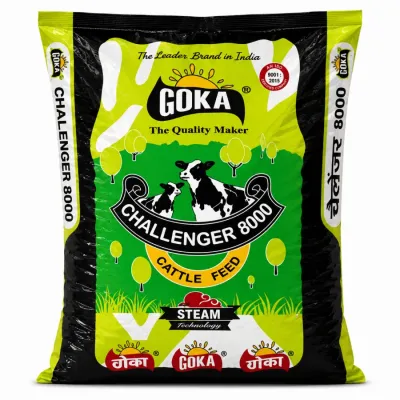
Dairy Cows & Buffaloes
15-22 liters/day
Peak milk with high FAT & SNF

Dairy Cows & Buffaloes
10-15 liters/day
Maintains milk fat, prevents repeat breeding
When to Contact a Veterinary Doctor
Blood in dung, black tarry dung, fever with foul-smelling scour, severe weakness, or diarrhoea in several animals at once — veterinary cases, promptly. Persistent diarrhoea beyond a few days also needs a doctor's diagnosis.
Get Feed Guidance from Falah Enterprises
Free, personal guidance for your animal - tell us the details on WhatsApp or call us.