
Herd Health
Calves
Ringworm — The Circular Patches That Aren't Worms at All
Updated 26 Aug 2026 • By Falah Nutrition Desk, Animal Nutrition Advisor
Grey-white, round, crusty patches on a calf's face, around the eyes and on the neck — ringworm is a skin fungus, not a worm, and the most common skin disease of housed young stock. It usually cures itself in a few months, but it spreads through the shed and — take note — to people, so it deserves respect rather than panic.
Common Signs
- Round or oval patches of hair loss with grey-white, ash-like crusts
- Favourite sites: around eyes, face, ears, neck — mostly in calves and young stock
- Mild itching or none — unlike mange's torment
- Patches expanding outward in rings, sometimes merging
- Often several calves in a batch showing it together
Possible Causes
- A skin fungus whose spores survive long on posts, walls and equipment
- Young animals with immature immunity the main victims
- Crowded, dark, humid winter housing favouring spread
- Shared ropes, grooming brushes and rubbing surfaces carrying spores
- Run-down or poorly fed calves showing more and slower-healing patches
What the Farmer Should Check
- Typical picture: round crusty patches on the head/neck of young stock?
- How many animals affected, and what do they share?
- Housing light and dampness — sunlight is fungus-hostile
- Condition and feeding of the affected calves
- Any skin patches appearing on the people handling them — it does transfer
Feed Guidance
Ringworm in an otherwise thriving calf often heals on its own within a few months as immunity matures — sunlight helps, so let housed calves get outdoor time. Where patches are many, spreading, or you want faster resolution (sensible in a dairy shed), the doctor prescribes antifungal applications; treating the shed matters equally — sun-dry or disinfect posts, ropes and brushes, since spores wait months for the next calf. Wear gloves handling affected animals and wash up afterwards; ringworm on a farmer's forearm is a common souvenir. Feeding is the immune half: calves on proper starter feed, minerals and clean rearing clear ringworm faster and scar less — chronic, ever-spreading ringworm in a batch is often really a nutrition-and-housing report card.
Relevant GOKA Products

Calves (Cow & Buffalo)
Rapid growth - up to 200 kg by 5 months
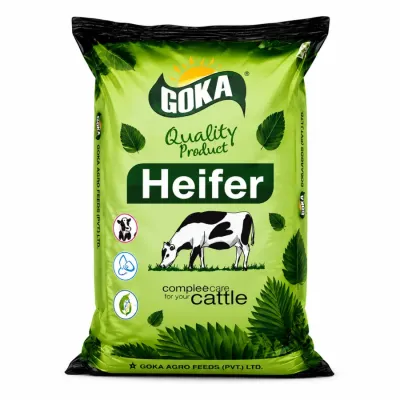
Heifers (Growing Young Cows)
Early breeding readiness & strong growth
When to Contact a Veterinary Doctor
Confirm the diagnosis with your veterinary doctor if patches are unusual, spreading fast or on adult milking animals — and mention any skin lesions on family members to your own doctor, as animal ringworm transfers to people.
Get Feed Guidance from Falah Enterprises
Free, personal guidance for your animal - tell us the details on WhatsApp or call us.